Commercial mold remediation removes mold from non-residential and multifamily buildings, usually under a written scope, with containment, drying and often a separate clearance check. Larger floor areas and occupied tenants make planning matter. Call the number on this page to be connected with a local mold company in Philadelphia.
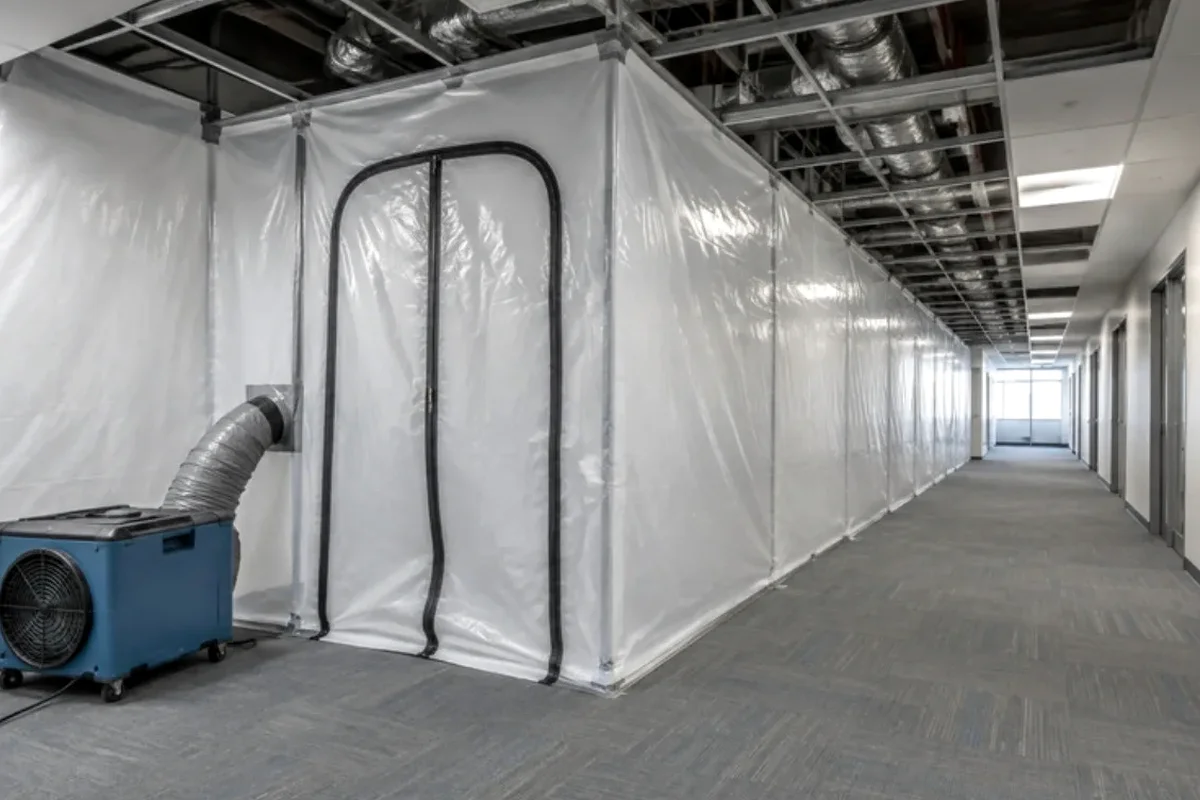
What counts as commercial
Commercial jobs include storefronts on Philadelphia's commercial corridors, offices, restaurants, schools, warehouses and apartment buildings. They differ from a house job in scale and in who is affected: tenants, employees and customers. EPA's guide says areas larger than about 10 square feet call for its commercial-building guidance or a professional, and commercial spaces blow past that quickly.
Common Philadelphia causes
Older mixed-use buildings often have flat roofs, aging drains, old galvanized and cast-iron plumbing and basements that stay damp. Mold turns up under leaking roof membranes, behind sweating pipes, in drop ceilings and around rooftop air handlers. Frozen-pipe breaks in an unheated unit, or heavy summer thunderstorms, can soak finishes in a single night.
How a commercial job runs
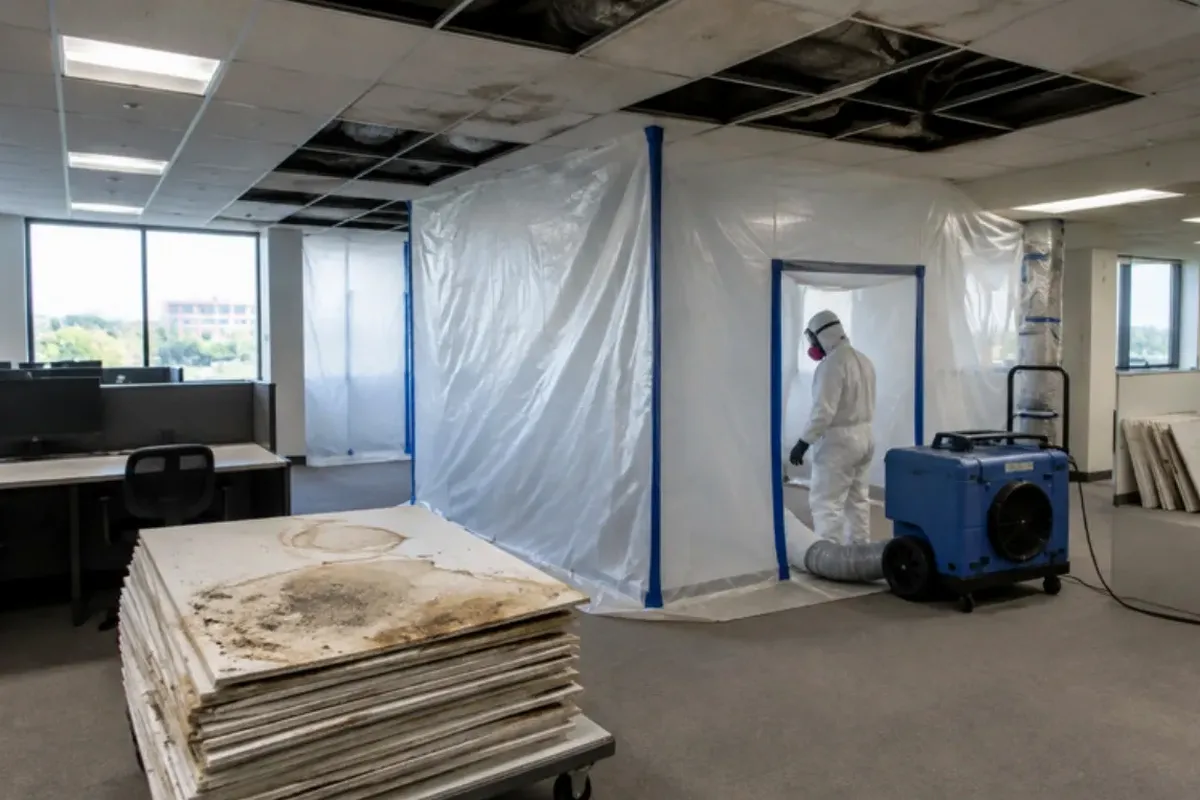
A written scope comes first: which rooms, which materials, how containment is set up and how air will be handled so mold does not spread to occupied space. Crews typically use barriers, negative air and HEPA filtration, remove damaged materials and dry the structure. Work is often scheduled around business hours. Owners frequently pair it with clearance testing before reopening.
Multifamily and tenant concerns
Philadelphia has many small apartment buildings, converted rowhouses and shops with apartments above. Mold in one unit often traces to a shared roof, a stack or a neighboring leak, so the fix may cross unit lines. Owners should notify tenants about the schedule, and tenants should put complaints to the landlord in writing before turning to 311.
Cost and scope
The cost data we track is for homes, so we do not quote a commercial price. Square footage, building systems and the need to keep tenants in place drive commercial quotes, so get the scope in writing from more than one company.
Pennsylvania and Philadelphia checks
The Pennsylvania Department of Health says there are no state regulations about mold, so no state mold license exists to check. Home improvement registration with the Attorney General applies to work on private residences, which covers an apartment building's residential units but not purely commercial space. Philadelphia says a City contractor license is required for construction or repair businesses outside its one- and two-family exemption, and its L&I office handles building permits for structural repairs. Ask for the license, proof of the contractor's permit history, and a written contract.
If you're across the river in New Jersey or in Delaware, the rules differ.
Commercial Mold Remediation questions from Philadelphia homeowners
Does Pennsylvania require a license for commercial mold remediation?
Can a business stay open during remediation?
How much does commercial mold remediation cost?
Who handles mold in a Philadelphia apartment building?
Related mold services in Philadelphia
Helpful guides
Commercial Mold Remediation in nearby cities and towns
Bucks County
Montgomery County
Delaware County
Chester County
Camden County
Burlington County
Gloucester County
Mercer County
Hunterdon County
New Castle County
Sources
Last updated: