Warehouses and big open buildings bring their own challenges: tall roofs, stored inventory and little climate control. The scope often begins by finding which leak or humidity source is feeding the growth. Call the number on this page to be connected with a local mold company in Exton.
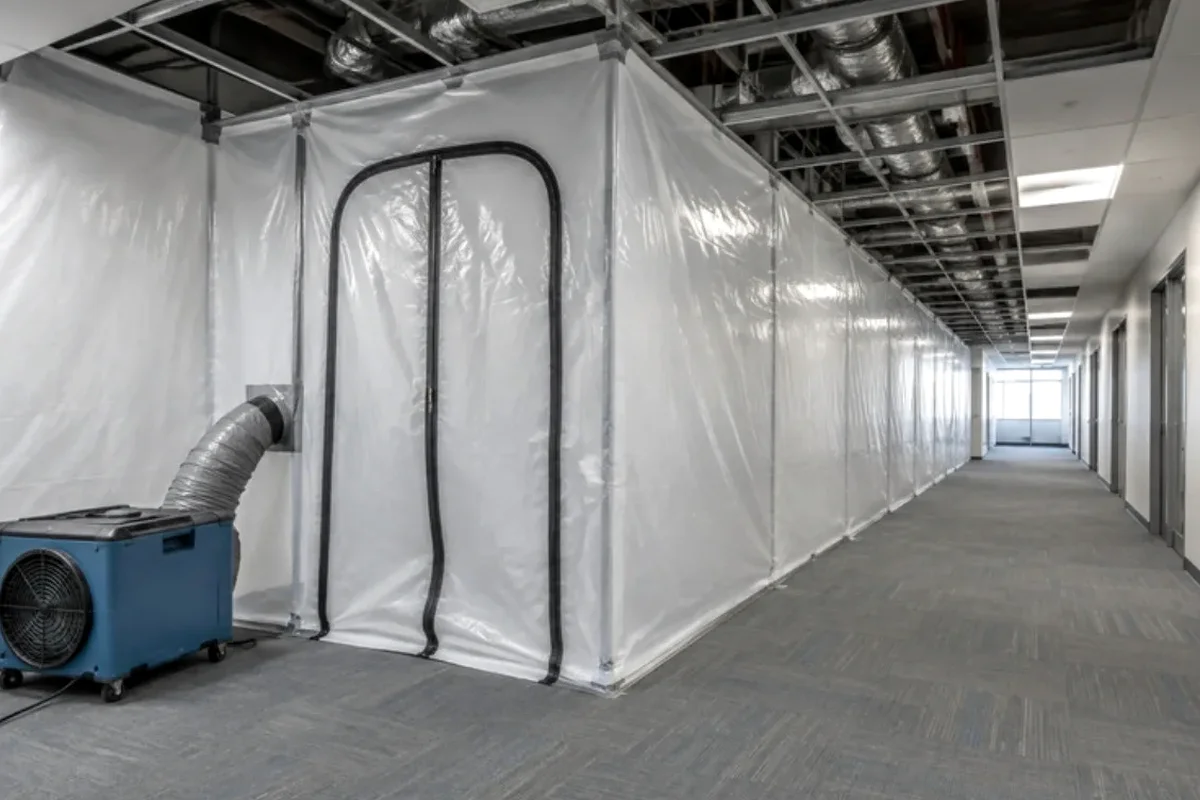
Apartment halls and shared rooms
Corridors, stairwells, mail rooms, boiler rooms and shared laundries all hold moisture at times. Managers and boards usually ask first whether the problem lies in a common area or inside one unit, since that decides who arranges the work, who pays and who must be told.
Basements and below-grade space
Many older commercial and mixed-use buildings here have basement storage, mechanical rooms or stockrooms below grade. Seepage through brick and stone walls, a failed sump or a wet floor drain keeps stock and shelving damp, and growth often begins behind boxes where nobody looks for weeks.
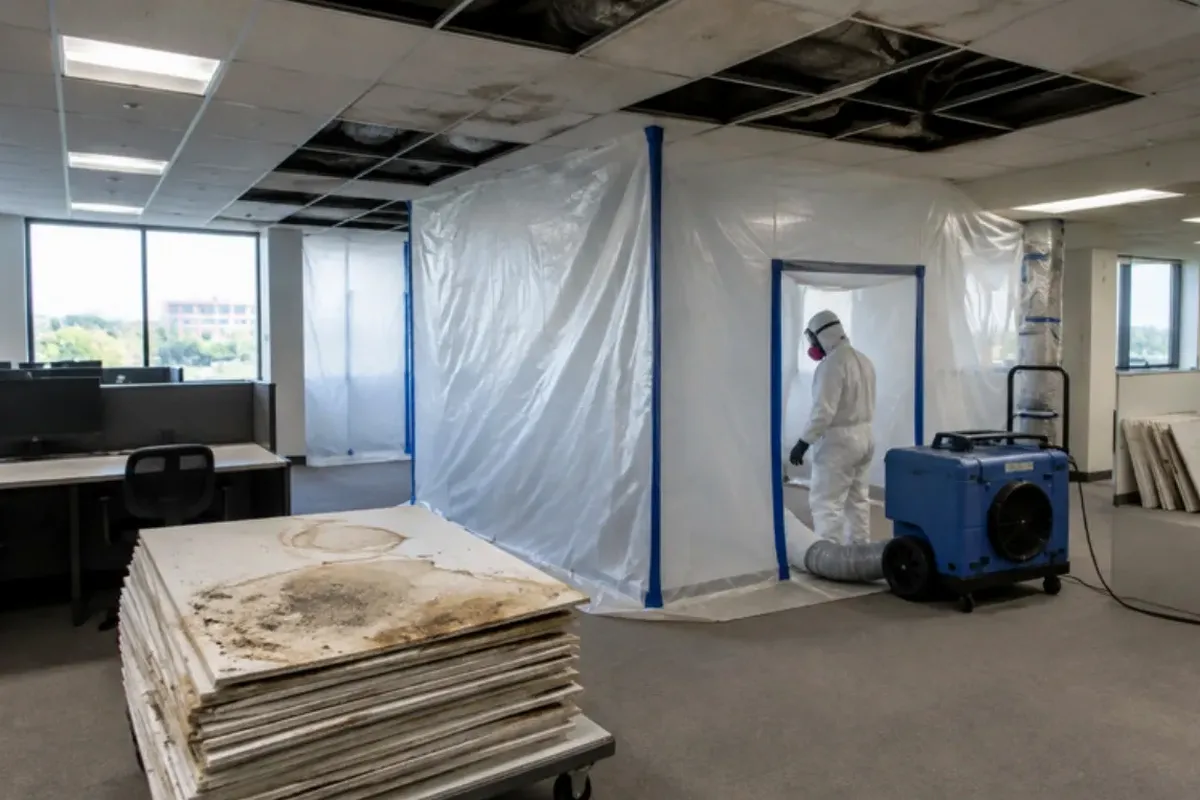
Planned job or emergency job
A scheduled project lets companies line up crews and equipment sensibly. A rushed one, after a flood or a failed inspection, costs more to mobilize and leaves less time for careful scoping. If you can, stop the water first, then spend a day comparing scopes.
Before work starts in Exton
Home improvement contractors working on Pennsylvania homes generally must register with the Attorney General's office, and the registration number (it starts with PA) has to appear on contracts, estimates and ads. The office's online search confirms it.
Ask whether the company that removes the mold will also test its own work. Many owners prefer an independent assessor for clearance.
If the job grows into replacing drywall, cabinets or framing, ask whether the rebuild needs a permit from the township or borough building office for your address.
If river, creek or storm water got inside, FEMA's flood map service and your insurer can tell you how the address is zoned.
Nearby, the same kind of help is available in Downingtown, West Chester and Chester Springs.
The usual order of work
- Someone inspects and drafts a plan, sometimes an independent assessor.
- The remediation company reviews it and sets a work order.
- The area is sealed, affected materials come out and surfaces are cleaned.
- The space dries and the source gets repaired.
- A final check confirms the result.
Ask who answers for each step.
Humidity in larger rooms
EPA suggests holding indoor humidity under about 60 percent, ideally 30 to 50. In big rooms with many occupants, a controls schedule that stops the cooling overnight can let humidity creep up. Small humidity monitors and a revised schedule often solve it without any major equipment work.
Commercial Mold Remediation questions in Exton
How should I pick a company for a commercial property?
What is a final clearance check?
Can a shared air handler carry mold between suites?
Is a permit needed for commercial mold work?
More mold services in Exton
Commercial Mold Remediation nearby
Helpful guides
Sources
Last updated: