Mold in a commercial property usually leads back to a roof leak, an ailing rooftop unit, a plumbing run or a suite that sat sealed and humid. EPA says to correct the moisture first, because removal alone will not last. Call the number on this page to be connected with a local mold company in Franklinville.
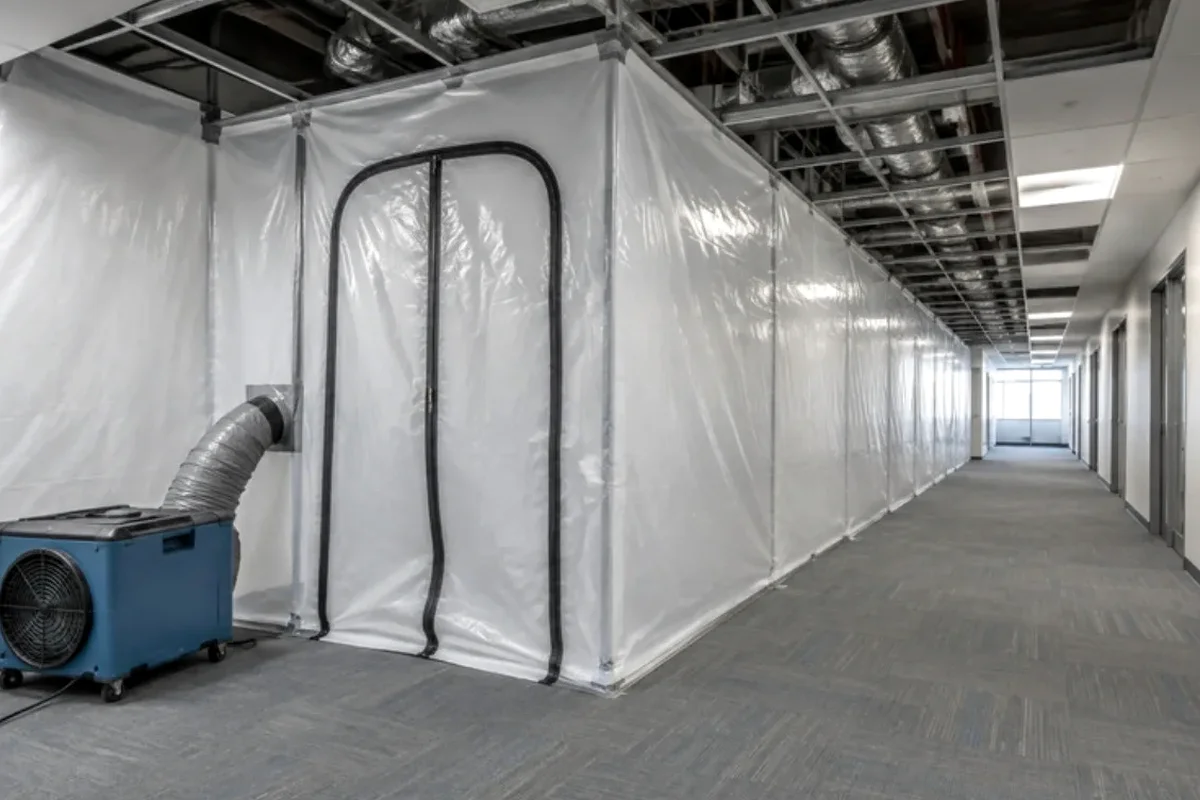
How trouble announces itself in a commercial space
Around Williamstown, the typical clues are sagging or tea-colored ceiling tiles, bubbling paint, an odor that returns whenever the HVAC starts, and dark growth along baseboards or near diffusers. Employees often catch the smell before anyone sees a stain, so treat it as a moisture lead.
Condensation on cold surfaces
In winter, warm humid air from kitchens, showers and crowded rooms meets cold exterior walls, windows and roof decks. Droplets form and soak the materials. In warehouses and gyms, uninsulated metal roofs drip the same way through the cold months, wetting insulation and the stock below.
Properties far from town services around Franklinville may include older outbuildings, shops and well houses where long drainage paths and soggy ground keep walls wet after rain.
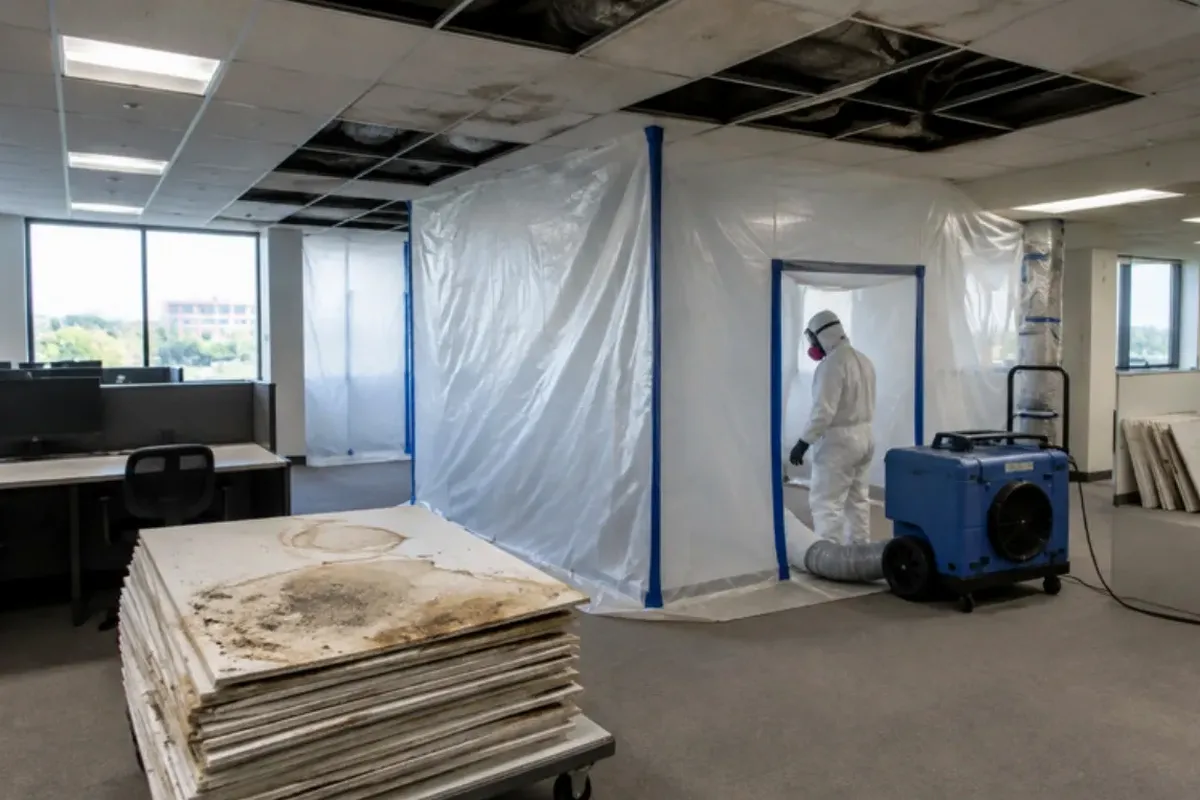
Work that falls outside the mold scope
Roofing, plumbing, new drywall, paint and ceiling tile usually belong to other trades. A mold proposal may end once surfaces are clean and dry, so ask where it stops and who handles the rebuild. Set aside money for those trades as well.
Keeping tenants and neighbors informed
In multi-tenant buildings, a short notice to nearby occupants explaining what is happening, when, and what they may notice goes a long way. Managers who share the schedule and the final results in writing usually field fewer complaints and keep the project moving.
Answering complaints well
Give staff, tenants and members a simple way to report odors and stains, and reply in writing. A prompt look, a clear note of findings and a follow-up show good faith. Managers who respond early usually sidestep bigger disputes and bigger repairs down the line.
Who handles what in Franklinville
Contractors doing residential home improvement work in New Jersey must register each year with the Division of Consumer Affairs. Registration isn't a mold credential, but it's the state check that applies here.
Keep the inspection report, the scope of work and any clearance results together; buyers, landlords and insurers often ask for them later.
Rebuild work after the mold comes out, such as new drywall or framing, may need a permit; the Franklin Township construction office is where to ask for Franklinville addresses.
For flood zone questions after a heavy rain, FEMA's flood maps and your insurance agent can confirm the mapped zone for an address.
Calls from Franklinville are often matched with companies that also cover Williamstown, Clayton and Monroeville.
Commercial Mold Remediation questions in Franklinville
How should I pick a company for a commercial property?
How are apartment common areas handled?
What humidity should a business space aim for?
Is a permit needed for commercial mold work?
More mold services in Franklinville
Commercial Mold Remediation nearby
Helpful guides
Sources
Last updated: