Clearance matters most on larger or hidden jobs, yet smaller ones gain from a final look too. A written result gives buyers, landlords and insurers something to read instead of a verbal promise. Call the number on this page to be connected with a local mold company in Bristol.
Clearance versus an inspection
An ordinary inspection asks whether a problem exists. Clearance asks whether the specific problem named in the plan was resolved. That narrower question is tied to the original findings and the cleanup scope, and it is usually quicker to answer than a full survey. Both have their place.
Masonry, plaster and old framing
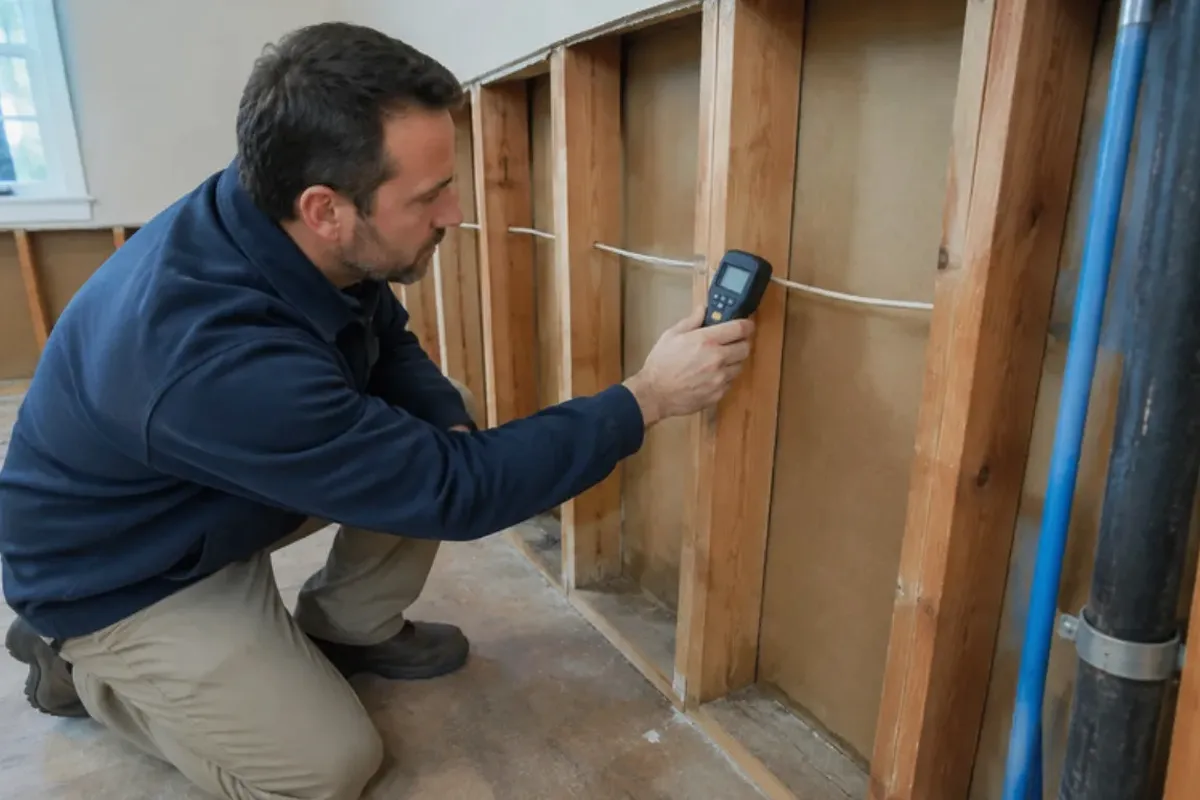
Brick, stone and plaster dry more slowly than new drywall, and old lumber can hold water deep inside. For older houses the assessor often takes extra readings on those materials, because a surface that feels dry may not be dry all the way through. Patience here prevents a failed second check.
Homes near the river or a creek here sit lower with a higher water table, so assessors compare indoor specimens with an outdoor reading taken that same day nearby.
Local details for Bristol
Pennsylvania's Department of Health says there are no federal or state regulations about mold, so no state mold license exists to look up. What you can check is the company's home improvement contractor registration with the Pennsylvania Attorney General.
Some owners hire one independent company for the inspection and clearance check and a different company for the cleanup, so the business judging the result isn't the one that did the work.
If the job grows into replacing drywall, cabinets or framing, ask whether the rebuild needs a permit from the township or borough building office for your address.
If river, creek or storm water got inside, FEMA's flood map service and your insurer can tell you how the address is zoned.
Companies that take calls here usually also work in Burlington, Croydon and Florence.
Specimen count and lab speed
Each air or surface specimen adds lab handling, and faster turnaround costs more than the standard few days. If a closing date or rebuild crew is waiting, say so early. Planning ahead usually beats paying for rush handling at the last minute. A quick call settles the options.
How the visit looks
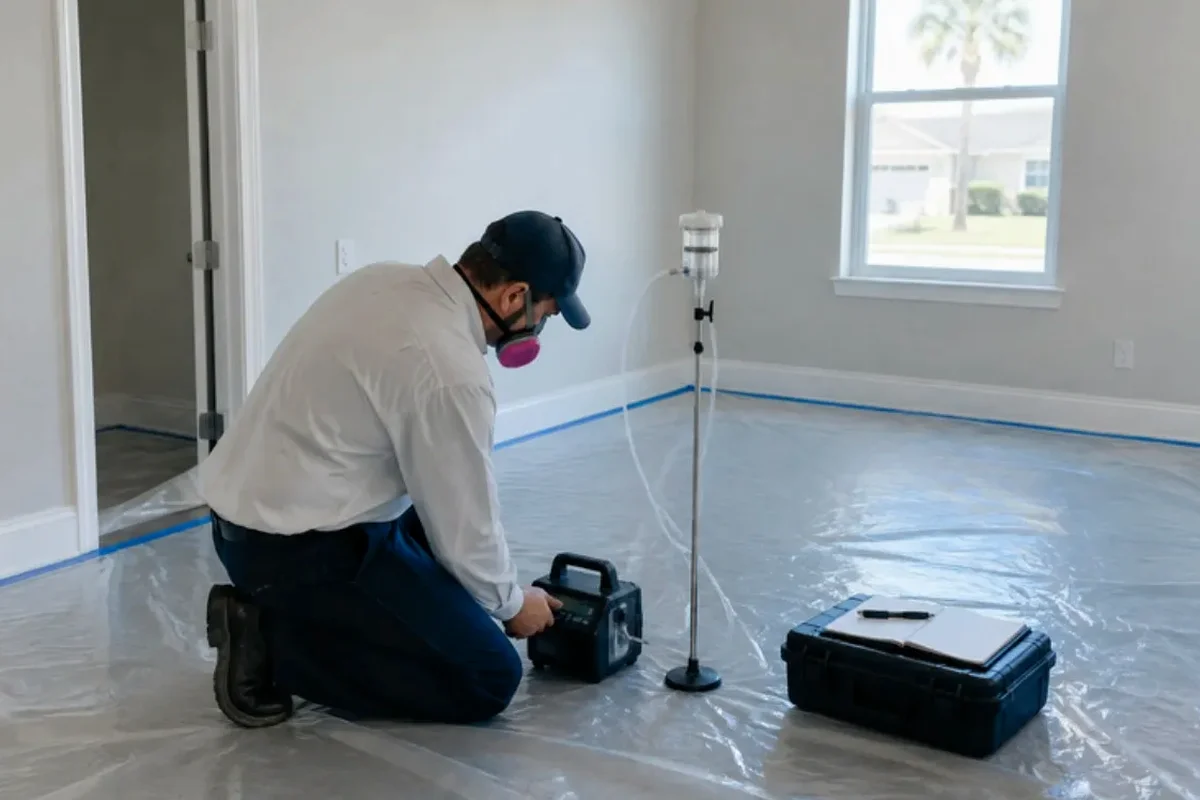
Expect the assessor to review the plan, walk the work area, photograph conditions, take moisture readings and collect specimens. A typical work area takes a couple of hours. The remediator may be asked questions, but the final decision on passing belongs to the assessor alone. Ask when the report will reach you.
Water first, always
No clearance report protects a house that is still taking on water. A dripping pipe, roof leak or seeping foundation will bring mold back in the same place. EPA's advice applies: solve the moisture problem and dry wet materials within 24 to 48 hours. Fixing the source is the one step that cannot be skipped.
Post-Remediation Clearance Testing questions in Bristol
Can the remediator clear its own work?
What if the first clearance fails?
What happens during the visit?
How long until results arrive in Bristol?
More mold services in Bristol
Post-Remediation Clearance Testing nearby
Helpful guides
Sources
Last updated: