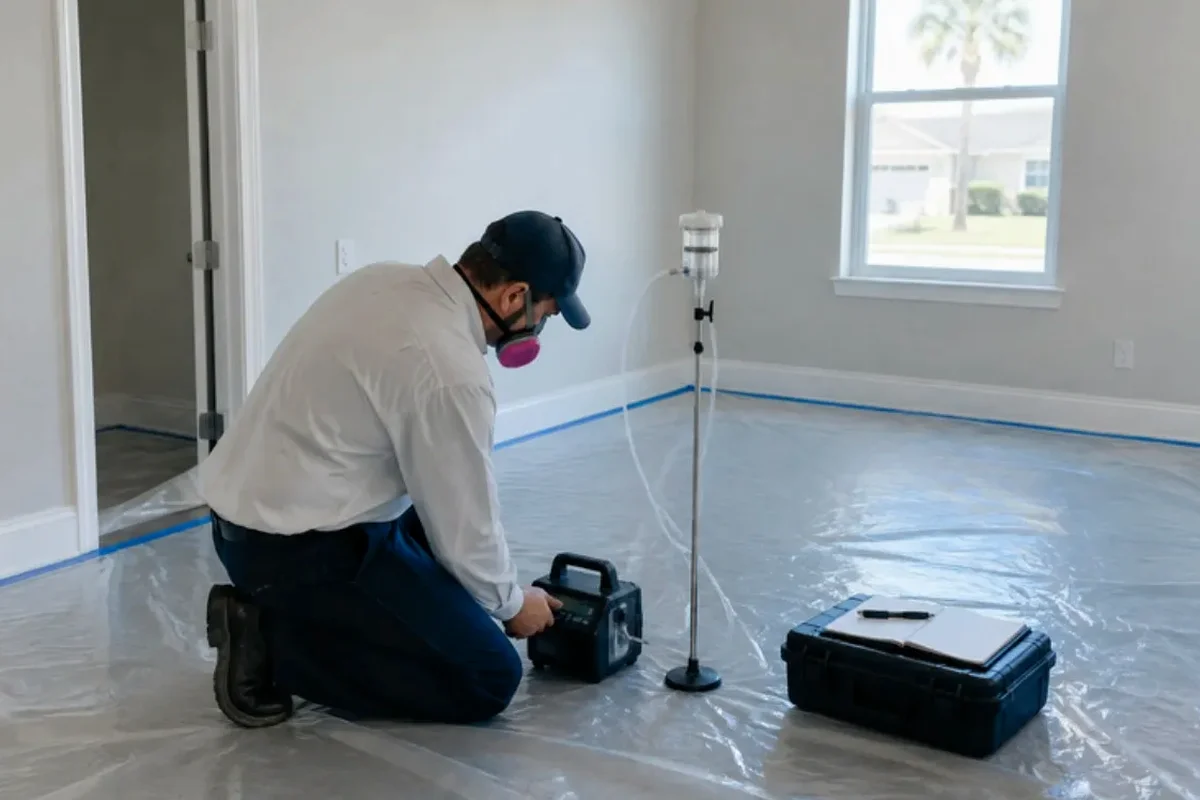
Clearance testing is the closing assessment after mold work: an independent assessor inspects the cleaned area, reads moisture meters and often takes air or surface specimens to confirm the job met its written plan. Call the number on this page to be connected with a local mold company in Riverton.
Clearance versus an inspection
An ordinary inspection asks whether a problem exists. Clearance asks whether the specific problem named in the plan was resolved. That narrower question is tied to the original findings and the cleanup scope, and it is usually quicker to answer than a full survey. Both have their place.
Moisture readings
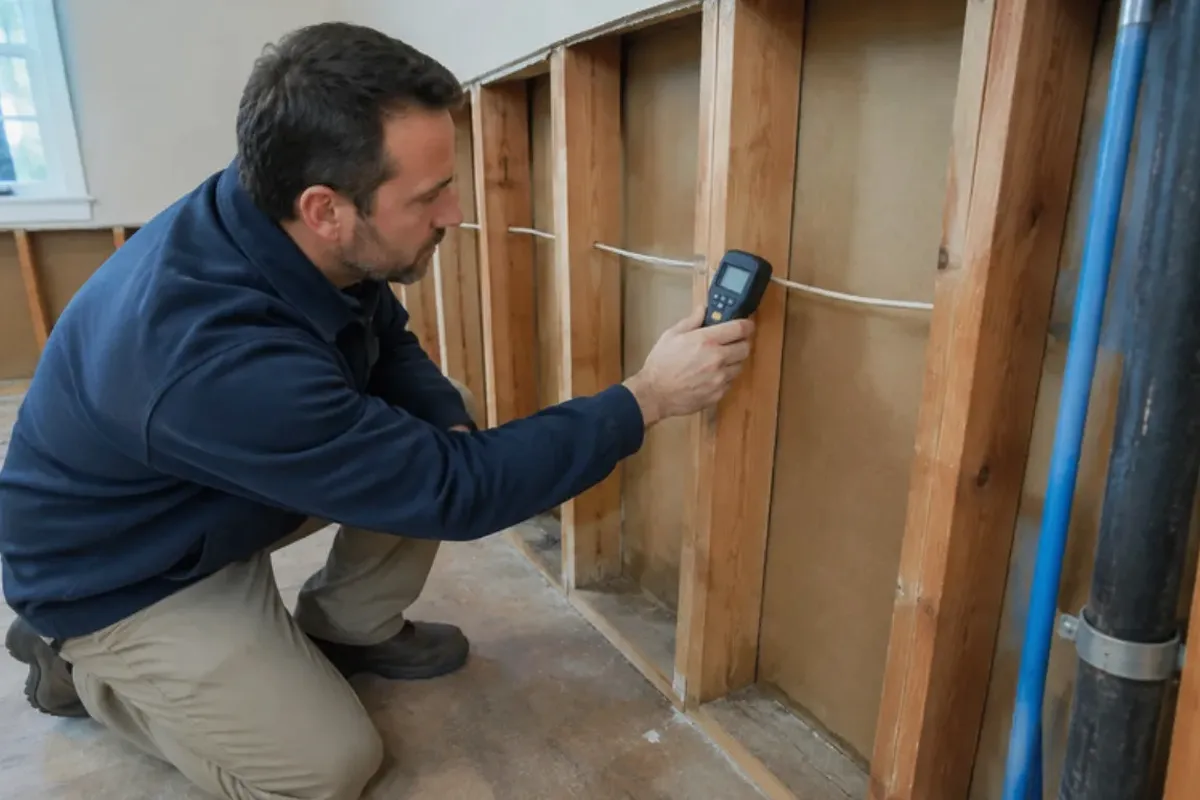
Mold needs water, so a meter reading framing, subfloor or masonry matters as much as eyesight. Materials that still read wet suggest the source was not fully solved. Expect readings in every area of concern, and expect wet numbers to send the project back to drying. Readings are logged with locations and dates.
Near a river or creek, a passed clearance matters twice over: nearby water makes repeat growth more likely, so keep moisture control in place after the work is done.
Return visits and what they add
A failed first look usually means the remediator redoes the flagged areas, often at its own cost under the contract, and the assessor returns for another visit. Ask in advance how a repeat visit is billed so a second pass does not catch you off guard. Written terms beat verbal assurances.
What to hold on to
Keep the plan, work scope, clearance report, lab sheets and photographs in one place. A buyer, lender or insurer may ask for them years from now. Store a digital copy as well, and give another to whoever manages the property or the mortgage. Label the folder clearly.
Water first, always
No clearance report protects a house that is still taking on water. A dripping pipe, roof leak or seeping foundation will bring mold back in the same place. EPA's advice applies: solve the moisture problem and dry wet materials within 24 to 48 hours. Fixing the source is the one step that cannot be skipped.
Useful local contacts for Riverton
New Jersey's Department of Health says there are no state certification programs for companies doing mold work. Home improvement contractors do have to register with the Division of Consumer Affairs, and the number belongs on the contract.
Ask whether the company that removes the mold will also test its own work. Many owners prefer an independent assessor for clearance.
Check with the Riverton Borough construction office before walls, cabinets or flooring go back in if the work goes beyond cleanup.
For flood zone questions after a heavy rain, FEMA's flood maps and your insurance agent can confirm the mapped zone for an address.
Nearby, the same kind of help is available in Riverside, Palmyra and Pennsauken.
Post-Remediation Clearance Testing questions in Riverton
Who should perform clearance?
Can the remediator clear its own work?
Do small cleanups need clearance?
Can I rebuild before clearance?
More mold services in Riverton
Post-Remediation Clearance Testing nearby
Helpful guides
Sources
Last updated: