If the air has an earthy smell, registers are speckled or the floor under the air handler stays wet, moisture is probably sitting somewhere in the system. EPA advises against running equipment you know is contaminated by mold. Call the number on this page to be connected with a local mold company in Dublin.
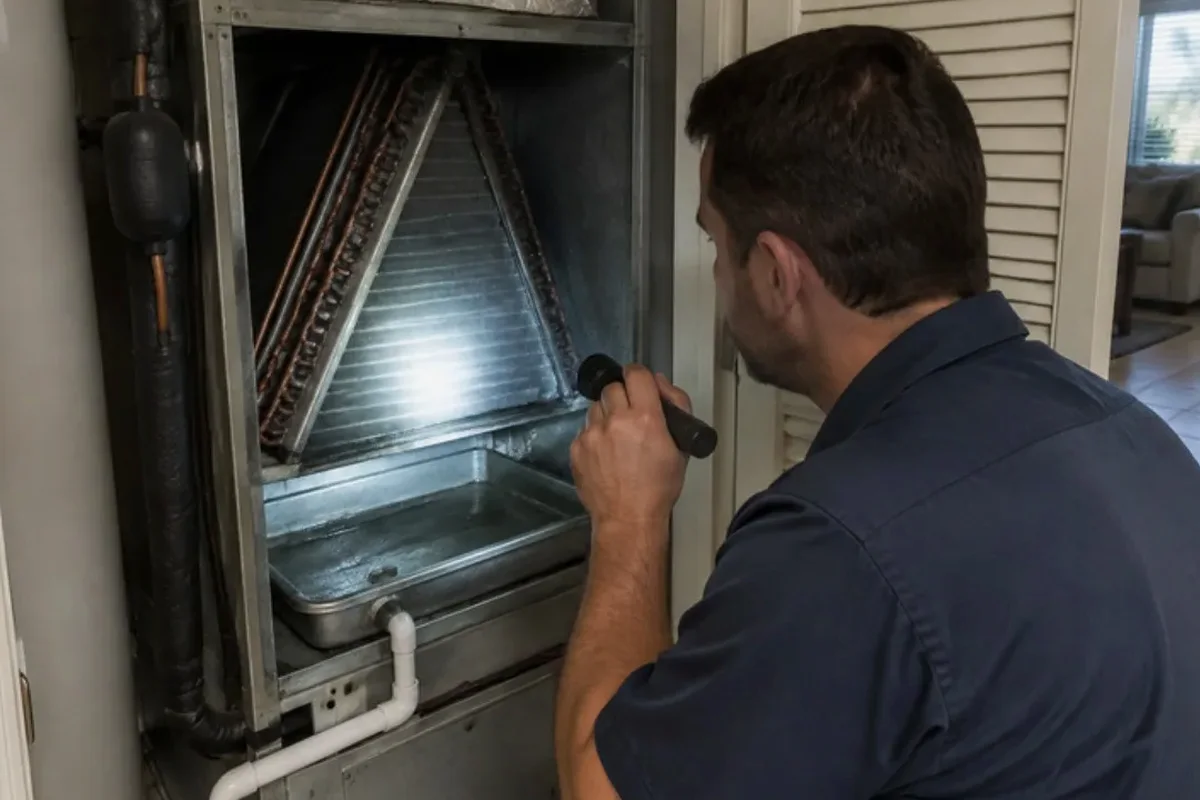
A quick walkthrough you can do
Begin where the furnace or air handler lives. Look under it for drips, rust or a discolored pan. Scan ceilings above for tan rings, then aim a flashlight through a return grille. Take pictures as you go, because they let a company size up the work before driving over.
Outside water finding its way in
A flat rowhouse roof that ponds, a failed flashing around a vent, or a split supply line above the air handler can soak duct wrap the same way condensation does. Working out whether the water comes from the equipment or from outside is the first question for any company.
Who handles what in Dublin
Home improvement contractors working on Pennsylvania homes generally must register with the Attorney General's office, and the registration number (it starts with PA) has to appear on contracts, estimates and ads. The office's online search confirms it.
Keep the inspection report, the scope of work and any clearance results together; buyers, landlords and insurers often ask for them later.
If the job grows into replacing drywall, cabinets or framing, ask whether the rebuild needs a permit from the township or borough building office for your address.
For flood zone questions after a heavy rain, FEMA's flood maps and your insurance agent can confirm the mapped zone for an address.
Calls from Dublin are often matched with companies that also cover Perkasie, Fountainville and Silverdale.
Questions that keep an estimate straight
Find out what will be scrubbed, what will be hauled out, how the work zone gets sealed, whether the system stays off during the job, and what happens if more growth shows up behind a panel. Insist on written answers so nothing surprises you later.
What a visit usually involves
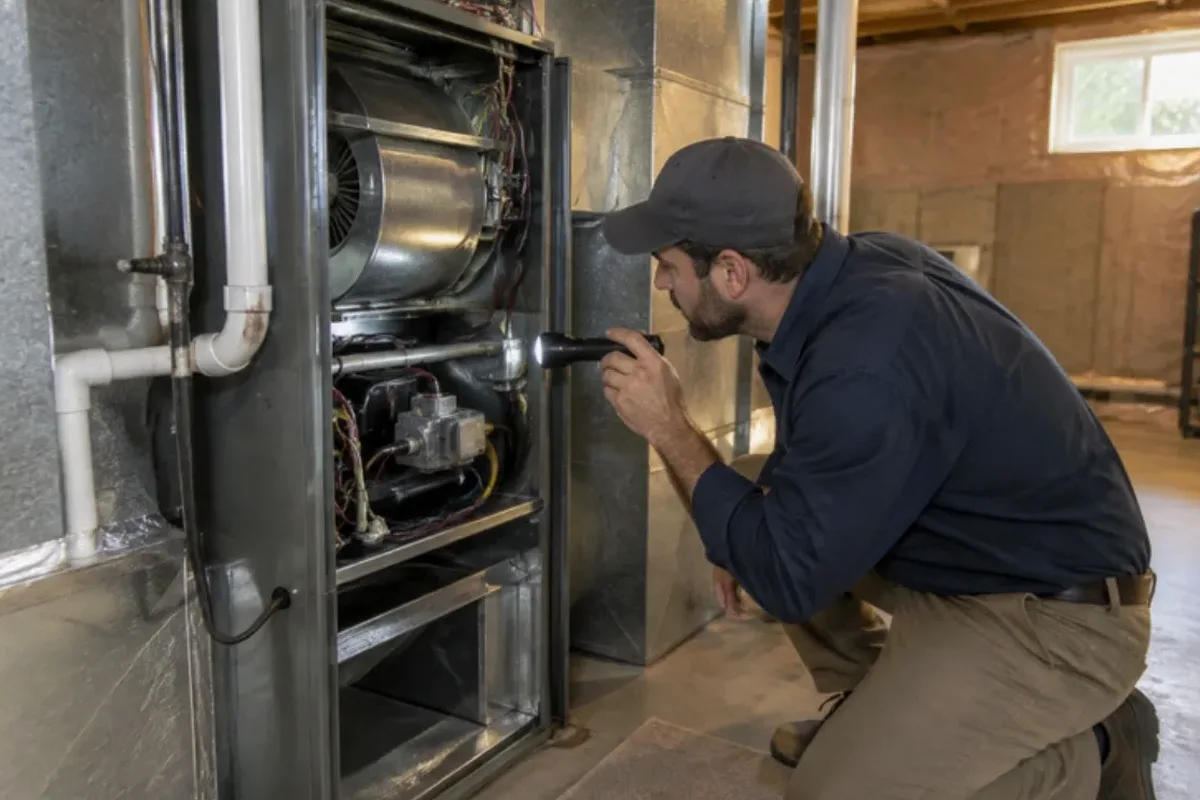
Plan on a walk through the equipment area, basement or attic and the registers, followed by a look at the pan, coil and wrap and some moisture readings on nearby materials. Larger projects may start with an assessor's written plan before any cleanup begins. Request a copy.
Seal and wrap the duct runs
Snug joints and undamaged wrap stop chilled air from meeting warm, wet air, which is what makes a duct sweat. Where wrap has ripped or the vapor skin has peeled, patch it before the humid months. Closing return leaks also keeps damp basement air from being pulled into the system.
HVAC & Duct Mold Removal questions in Dublin
What causes mold in a basement furnace or air handler?
What should I ask a company that does duct mold work?
Can dripping ducts stain the ceiling?
Do I have to leave the house during the work?
More mold services in Dublin
HVAC & Duct Mold Removal nearby
Helpful guides
Sources
Last updated: