A dehumidifier helps keep a basement dry afterward, but it will not remove growth or stop water from coming in, so the source has to be repaired first. Call the number on this page to be connected with a local mold company in Burlington.
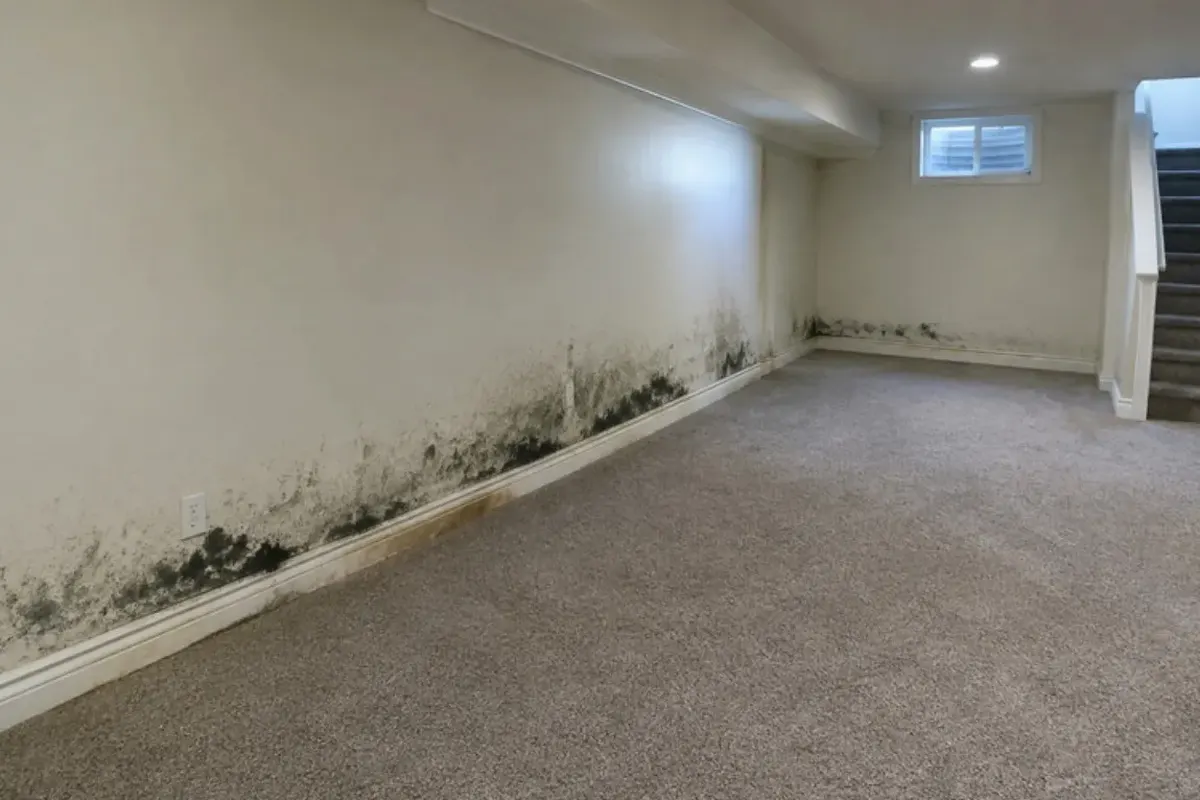
Finished Rooms Hide More
Carpet, pad, paneling and drywall stack up in layers that hold water against the foundation wall. Growth can spread between them for weeks, so by the time a smell appears the damage behind the finish is usually larger than the stain you can see. It may even reach the next room.
Sump Pumps and Drain Lines
Where a house has a sump pit, the pump is the last defense against a high water table. Float switches stick, power fails during storms and discharge lines clog. When the pit overflows, water spreads across the slab and wicks into walls. Many pits also share the line with a drain.
Low-lying blocks in Burlington near a creek tend to have wet cellars in spring and after big storms, which makes a working sump and sealed walls especially valuable.
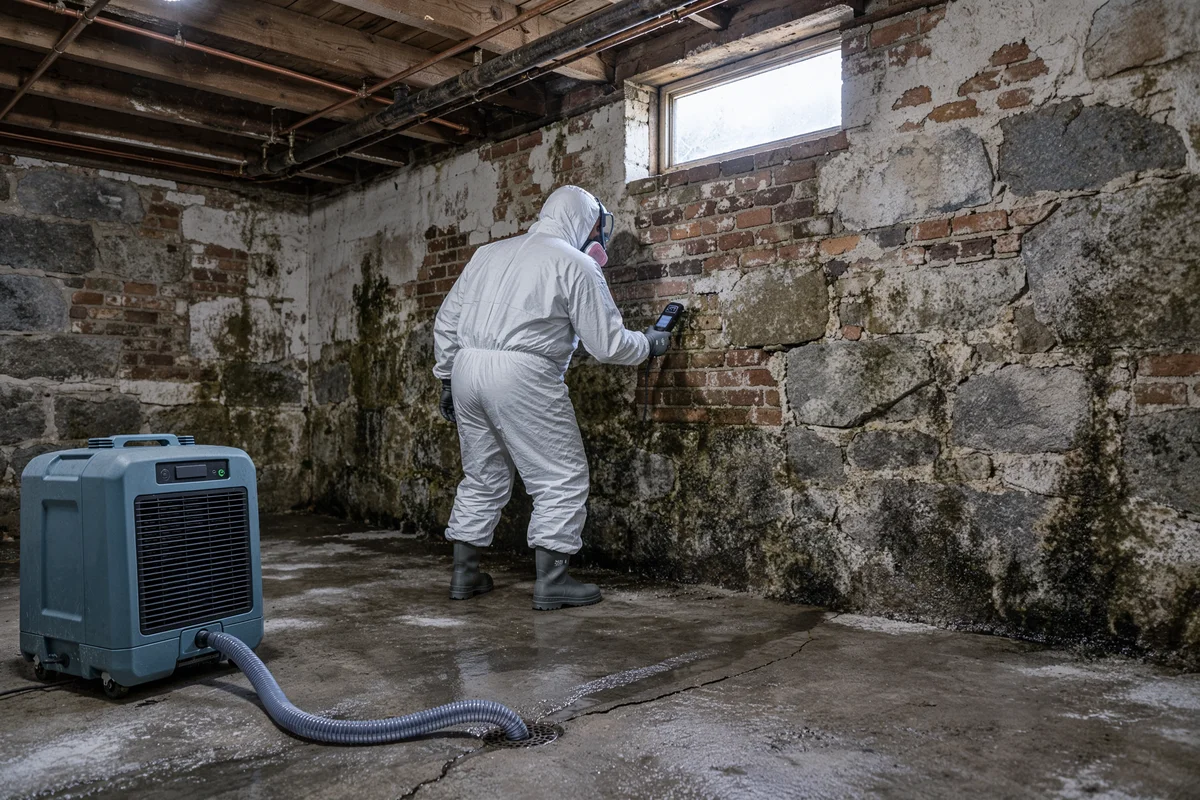
Drying Equipment and Time
Air movers and dehumidifiers running for several days add to a quote. Masonry and framing hold water longer than people expect, and drying until readings match dry areas prevents a repeat. A shorter drying time is not always the better deal, so ask what readings end the job.
Dehumidifying Afterward
Many owners keep a dehumidifier running through the damp months once the job is finished. EPA suggests keeping indoor humidity below about 60 percent, ideally 30 to 50. A hygrometer on a shelf shows whether the basement stays in range through summer storms and winter heat. Keep it somewhere you can see it.
Keep Stored Items Off the Floor
Plastic bins on shelves rise above small leaks and make problems visible sooner than boxes on the floor. Cardboard on bare slab wicks water and feeds mold quickly. Leave a few inches between stored goods and the wall so air moves and dark spots show.
Local details for Burlington
Contractors doing residential home improvement work in New Jersey must register each year with the Division of Consumer Affairs. Registration isn't a mold credential, but it's the state check that applies here.
Keep the inspection report, the scope of work and any clearance results together; buyers, landlords and insurers often ask for them later.
Check with the municipal construction office for your address before walls, cabinets or flooring go back in if the work goes beyond cleanup.
If river, creek or storm water got inside, FEMA's flood map service and your insurer can tell you how the address is zoned.
Nearby, the same kind of help is available in Bristol, Croydon and Beverly.
Basement Mold Removal questions in Burlington
Does carpet in a moldy basement have to be removed?
What should I do after my sump pump fails?
Is mold after a sewer backup handled differently?
Does a finished basement make mold worse?
More mold services in Burlington
Basement Mold Removal nearby
Helpful guides
Sources
Last updated: