A mold inspection is a walk-through by an assessor who looks for visible growth, checks building materials with moisture instruments and writes down what was found and why. It is mostly looking and measuring. Call the number on this page to be connected with a local mold company in Wrightstown.
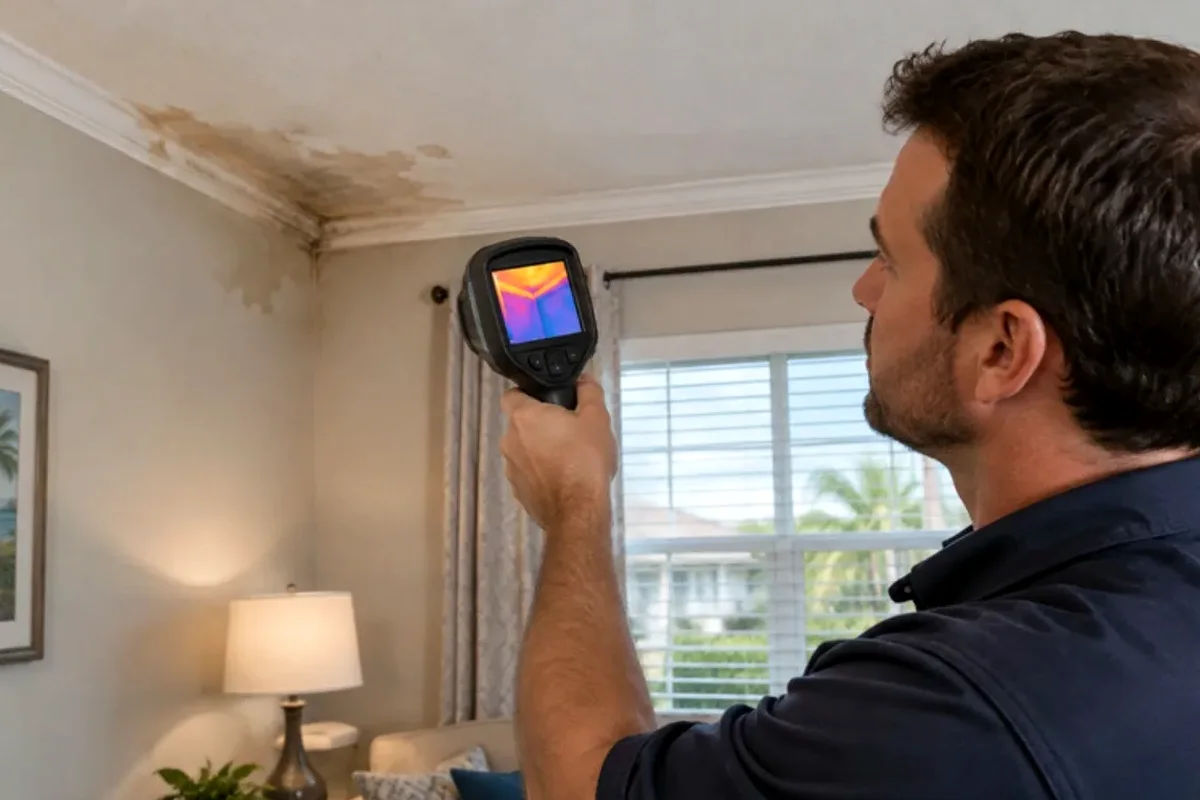
After a leak or storm
EPA advises drying wet materials within 24 to 48 hours. If that window passed, or you cannot tell whether the wall behind a stain is still damp, an inspection with moisture meters shows what remains wet before mold has a chance to settle in. Ask for readings rather than opinions when the time comes.
What assessors find in this region
Humid summers, cold winters and heavy thunderstorms stress houses from every side. Around Wrightstown, inspections often trace dampness to old drain lines, tired flashing, window wells or condensation on cold surfaces rather than a single dramatic failure. Old buildings rarely fail in just one way, so expect more than one finding.
On bigger acreage, poor drainage can soak crawl spaces and outbuilding floors, so an assessor may look at yard grade as well as the rooms inside.
Who handles what in Wrightstown
New Jersey doesn't certify mold companies, so ask about training, containment and clearance plans, and confirm the contractor's Division of Consumer Affairs registration before signing.
Some owners hire one independent company for the inspection and clearance check and a different company for the cleanup, so the business judging the result isn't the one that did the work.
Remediation itself is cleanup, but putting the room back together can be permitted work; ask the contractor whether the Wrightstown Borough construction office needs to be involved.
For flood zone questions after a heavy rain, FEMA's flood maps and your insurance agent can confirm the mapped zone for an address.
Nearby, the same kind of help is available in Mount Holly, Juliustown and Columbus.
Why quotes differ
One assessor may spend two hours and write a long report with photos and a scope of work; another may spend thirty minutes and give a verbal summary. Compare what you get, not just the number on the page. A thorough report usually justifies a slightly longer visit.
Questions to ask the assessor
Ask what tools will be used, whether sampling is planned and why, who writes the report and what it includes. Ask if they also perform removal. Clear, specific answers are a good sign, and vague ones are worth a second quote. Request a copy of any readings taken in a table form.
Humidity targets
EPA recommends keeping indoor humidity below about 60 percent, ideally between 30 and 50. An inexpensive hygrometer shows where a basement or bedroom sits. Use a dehumidifier where readings stay high and run exhaust fans when showering or cooking. Keep a simple log of readings so you can spot trends over a season.
Mold Inspection questions in Wrightstown
Is an inspection the same as mold testing?
Do I need an inspection if I can already see mold?
Can an inspection find mold inside walls?
Should the assessor also do the removal?
More mold services in Wrightstown
Mold Inspection nearby
Helpful guides
Sources
Last updated: