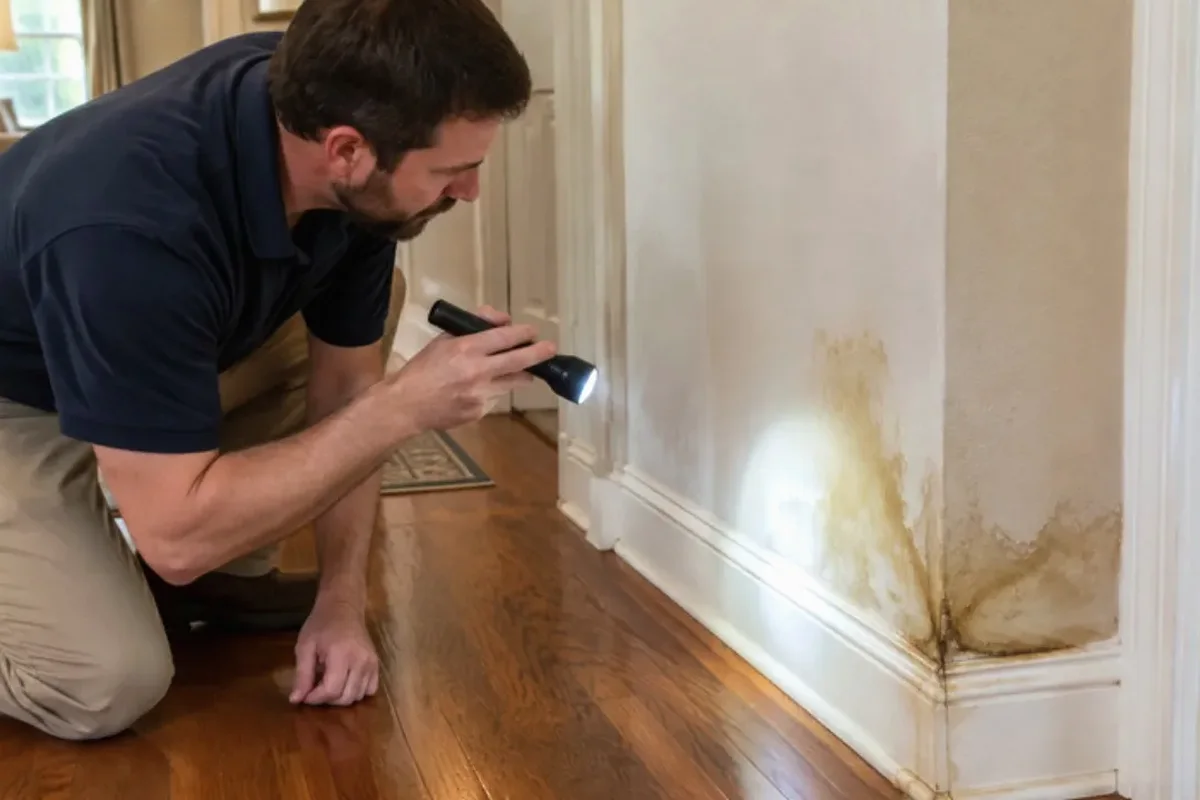
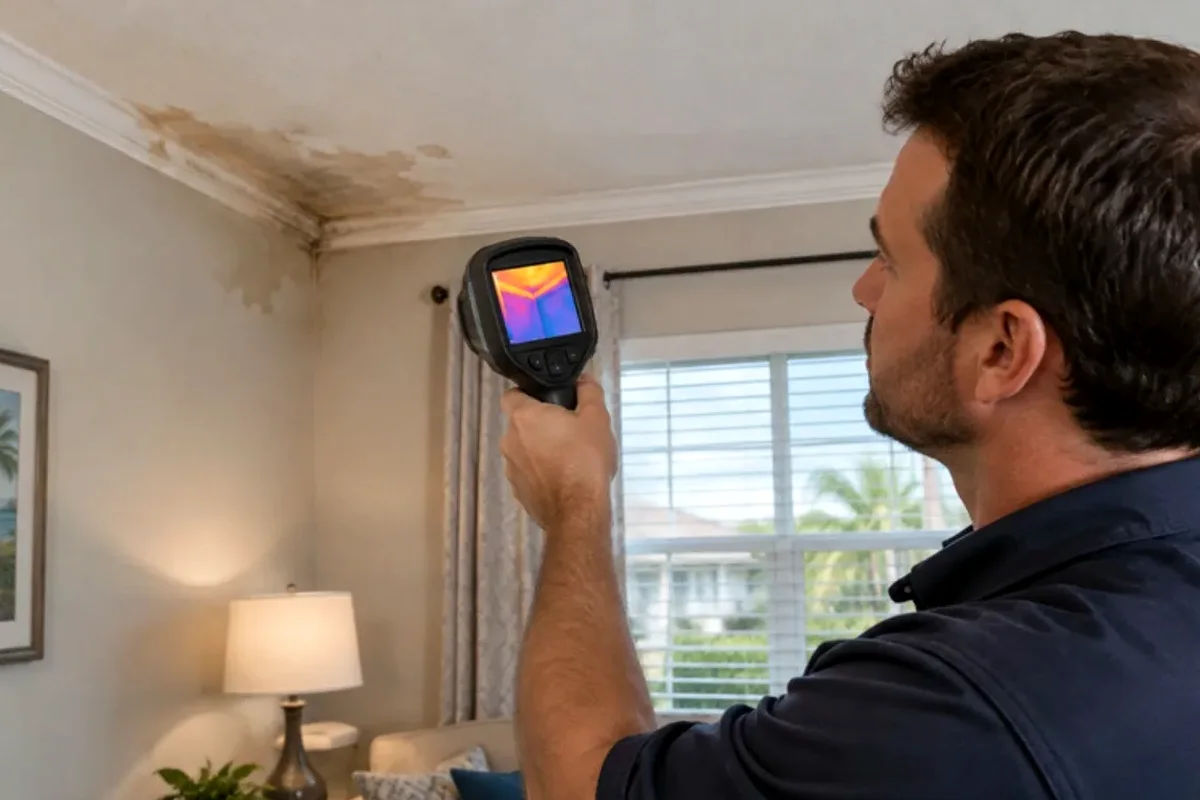
Assessors work with their eyes, a moisture meter and often a thermal camera or borescope to see inside walls and ceilings. The result is a written report that a remediation company, buyer or insurer can read. Call the number on this page to be connected with a local mold company in Clifton Heights.
Before you buy or sign a lease
Fresh paint on one wall, a dehumidifier running in a finished basement or a sellers' disclosure that feels vague can all point to old water trouble. An inspection records moisture levels and visible growth so you can negotiate with facts in hand. Bring up any renovation history, since new finishes can hide old trouble.
Mechanical equipment
Furnaces, central air and old boilers produce water or leak slowly. Condensate lines clog, ducts sweat in basements and attics, and radiator valves weep. Checking the equipment and nearby finishes is a regular part of a thorough visit. Look for rust and stains near these connections as a quick clue.
Permits and license checks in Clifton Heights
In Pennsylvania, home improvement work over $500 needs a written contract signed by both sides, with the price, the start and finish dates and the scope of work, and it must include a notice of your three-day right to cancel.
Keep the inspection report, the scope of work and any clearance results together; buyers, landlords and insurers often ask for them later.
Remediation itself is cleanup, but putting the room back together can be permitted work; ask the contractor whether the Clifton Heights Borough code office needs to be involved.
Water that came in from outside raises insurance questions; FEMA's flood map search shows whether the property sits in a mapped flood zone.
Calls from Clifton Heights are often matched with companies that also cover Drexel Hill, Darby and Morton.
What a good estimate lists
- Areas to be inspected
- Tools and methods used
- Whether lab samples are included
- Report format and delivery
- Any follow-up visit
Vague quotes are worth questioning.
Compare two or three quotes using the same checklist so the numbers actually line up.
Sampling, if it happens
Some assessors take air or surface samples for a lab. That should be a reasoned choice, not an automatic add-on. Samples show what spores are present at a moment in time, and results need to be read alongside the visual findings. Written findings, not verbal ones, should be the standard.
Do not paint over stains
Paint or primer hides the evidence and does not fix the moisture. It also hampers an inspection by covering what the assessor needs to see. Leave stains visible until the cause is known, then repaint after drying. Keep the stain visible until the source is confirmed fixed.
Mold Inspection questions in Clifton Heights
What tools do assessors use?
Do I need an inspection if I can already see mold?
Should the assessor also do the removal?
What should I do before the visit?
More mold services in Clifton Heights
Mold Inspection nearby
Helpful guides
Sources
Last updated: