Because mold work in many basements has no single state license behind it, ask each company how it will contain the space and what happens about the water source. Call the number on this page to be connected with a local mold company in Clayton.
Check the Window Wells
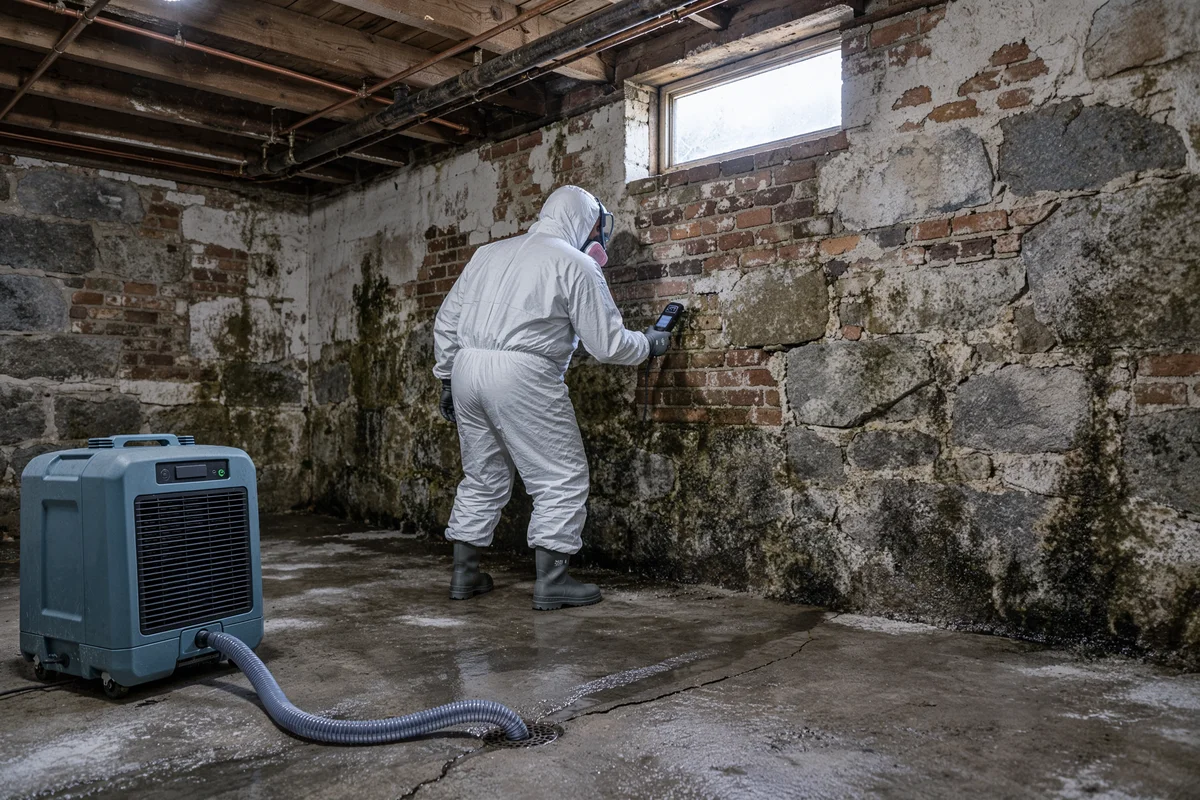
Look into each well after a hard rain. Leaves, silt and a missing cover let water pool against the glass, and a worn seal sends it indoors. Mold on the wall right below a window, or damp carpet at that corner, is a strong clue. Take a photo of it.
Why Humid Summers Hit Basements
Warm, muggy outdoor air drifts down the stairs and meets cool masonry, where it drops its moisture. Below-grade walls stay cold well into July, so condensation and slow seepage combine, and anything stored against the wall can turn damp and moldy within a season. Mold often follows in corners.
Access and Layout
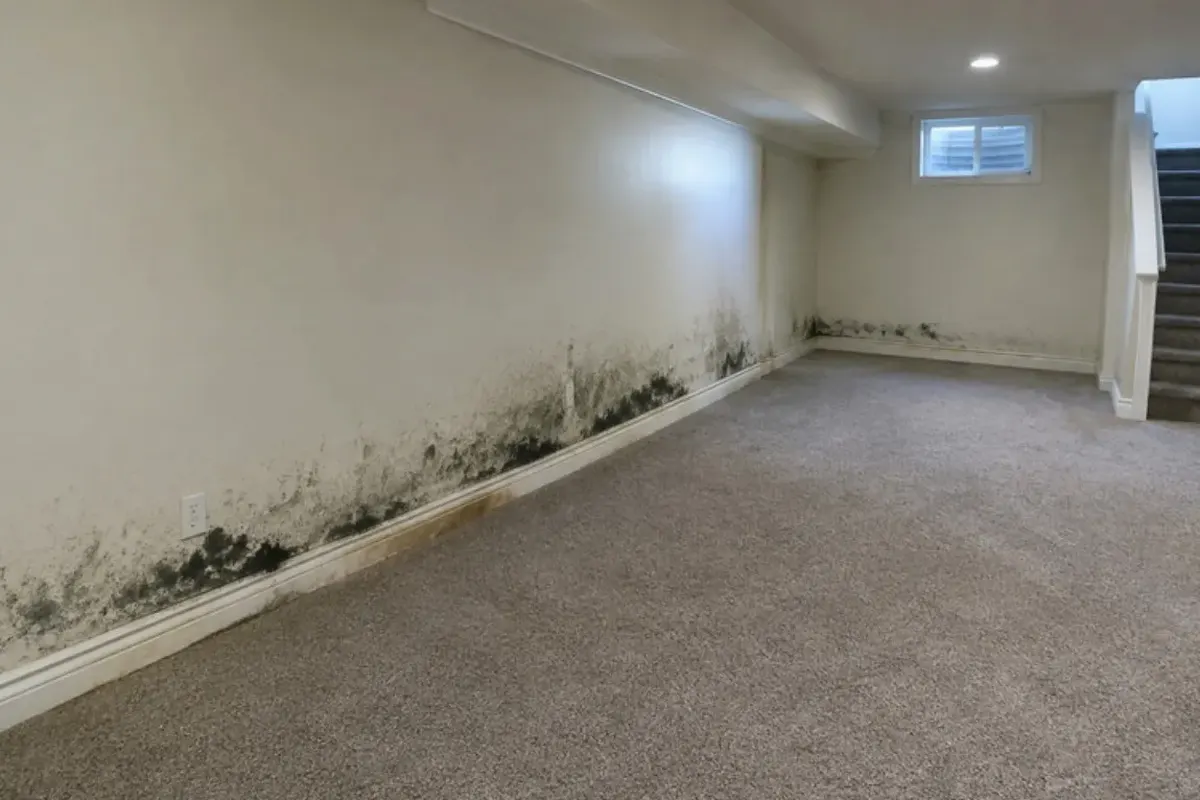
A walk-out basement with a wide door is easier to work than a narrow rowhouse cellar with a steep, tight stair. Hauling debris and equipment up a twisty staircase takes time, and low ceilings or tight crawl corners slow demolition. Expect those details to shape labor in the quote.
Local details for Clayton
New Jersey's Department of Health says there are no state certification programs for companies doing mold work. Home improvement contractors do have to register with the Division of Consumer Affairs, and the number belongs on the contract.
Keep the inspection report, the scope of work and any clearance results together; buyers, landlords and insurers often ask for them later.
Rebuild work after the mold comes out, such as new drywall or framing, may need a permit; the Clayton Borough construction office is where to ask for Clayton addresses.
Water that came in from outside raises insurance questions; FEMA's flood map search shows whether the property sits in a mapped flood zone.
Companies that take calls here usually also work in Glassboro, Franklinville and Monroeville.
What Comes Out and What Stays
Hard surfaces such as brick, stone, concrete, metal and sealed wood can often be cleaned. Pad, batt insulation, paper-faced drywall and particleboard that stayed wet generally cannot. A good company lists which finishes go and explains each choice in plain terms. Expect that list on paper before any work begins.
Do Not Use Bleach as a Fix
EPA does not generally recommend bleach or similar biocides for routine mold cleanup, and it will not dry a wall or stop seepage. Detergent, scrubbing and thorough drying matter more. If growth keeps coming back, look harder for the water behind it. Persistent regrowth usually signals moisture, not a weak cleaner.
Basement Mold Removal questions in Clayton
What is the white powder on my basement wall?
What should I do after my sump pump fails?
Do I need a permit to rebuild my finished basement?
How do I choose a company for basement mold work?
More mold services in Clayton
Basement Mold Removal nearby
Helpful guides
Sources
Last updated: