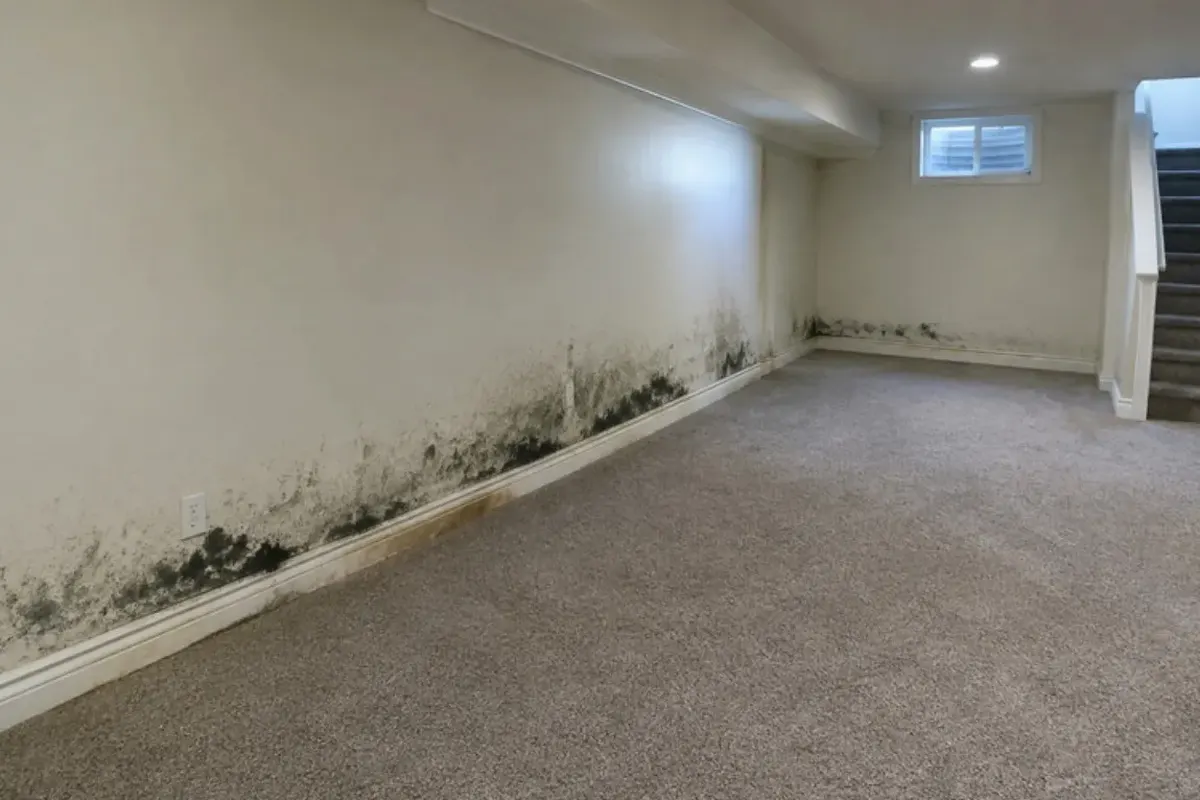
Stored boxes, couches and cabinets pressed against a damp wall are often the first things to grow mold, and moving them early makes the real wall easy to inspect. Call the number on this page to be connected with a local mold company in Chester Springs.
What Owners Notice First
- A stale smell after summer storms
- Dark specks low on drywall or paneling
- Cardboard boxes gone soft
- Baseboards that lift or swell
- A damp floor near the water heater
Any one of these deserves a moisture check; two together suggest a steady water source. Mention them when you call.
Stone and Brick Foundations
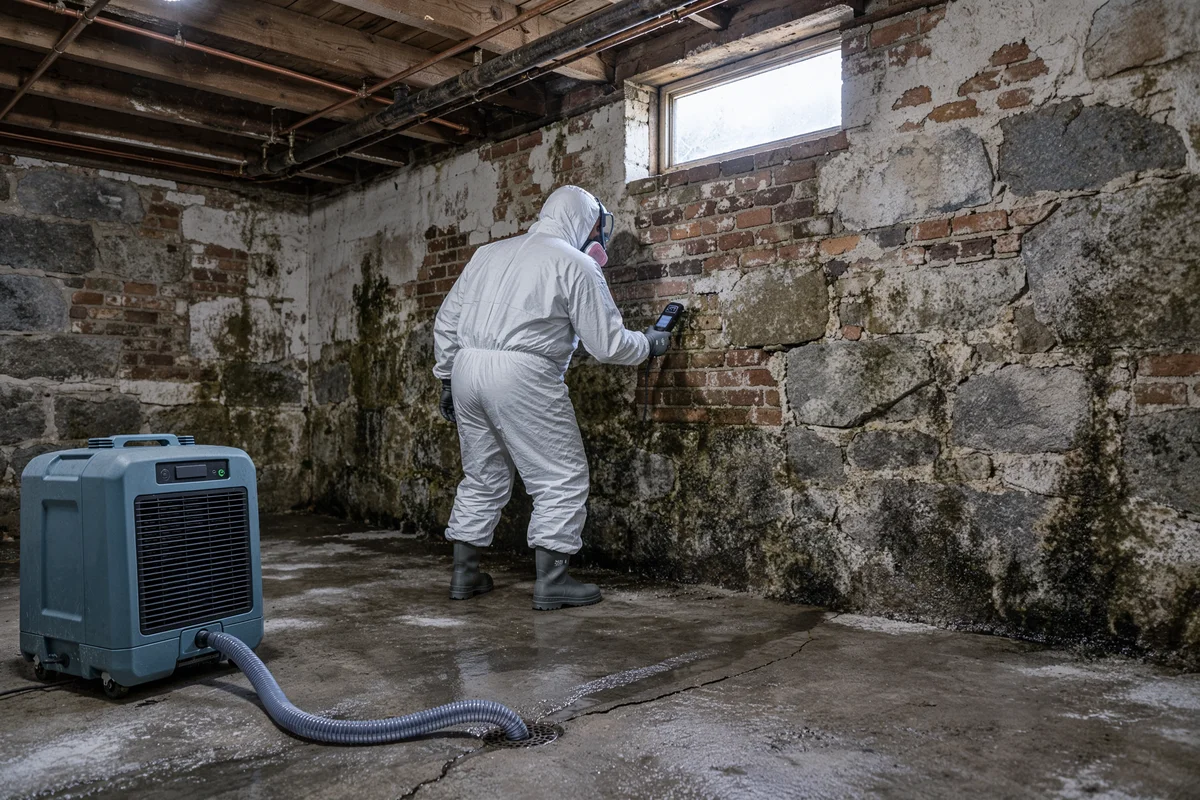
Older rowhouses, twins and farmhouses often sit on fieldstone or brick set in old mortar. Those walls let water through at joints, and lime mortar crumbles with age. The result is damp, mineral-stained walls that stay cool and humid in warm months. Mortar joints are usually where it gets through.
On larger lots around Chester Springs, older farmhouses often have stone cellars, dirt-floored corners and wells and pumps that fail in storms, which leaves lower levels exposed to seepage.
Who handles what in Chester Springs
The state sets no mold-specific license, so experience and paperwork matter more: ask which training the crew has, how containment will be set up, and for the company's Attorney General registration number.
Keep the inspection report, the scope of work and any clearance results together; buyers, landlords and insurers often ask for them later.
Check with the township or borough building office for your address before walls, cabinets or flooring go back in if the work goes beyond cleanup.
For flood zone questions after a heavy rain, FEMA's flood maps and your insurance agent can confirm the mapped zone for an address.
Nearby, the same kind of help is available in Phoenixville, Exton and Spring City.
Rebuild Is Usually Separate
Many removal quotes end at a clean, dry cavity. New drywall, paint, flooring, trim and built-ins come as another project. Ask who does that work and whether a permit is involved so the total picture is clear before anything starts. Get that split in writing so there are no surprises.
Typical Sequence of Work
- Stop or repair the water source.
- Seal off the area.
- Remove wet carpet, pad and drywall.
- Clean framing and masonry.
- Dry with fans and dehumidifiers.
- Check readings, then rebuild.
Order varies, but the water source and drying should always appear. Companies vary the order, yet the source and drying always belong in the plan.
Test the Pump Before You Need It
Pour water into the pit once or twice a season and watch the float rise and the pump discharge. Check that the outlet line is clear and points away from the house. A battery backup is worth discussing with a plumber, since storms often cut power just as groundwater rises.
Basement Mold Removal questions in Chester Springs
Why does my basement smell musty even when it looks dry?
Does carpet in a moldy basement have to be removed?
Will a dehumidifier fix basement mold?
Should I test the basement air for mold?
More mold services in Chester Springs
Basement Mold Removal nearby
Helpful guides
Sources
Last updated: